Is Camping Dying? A Night Under a Tarp to Find Out
Searches for camping have fallen to about half their early-2000s level. I spent a solo night under a tarp in a rainy English wood to ask why: pods replacing pitches, rising prices, and what campers can do.

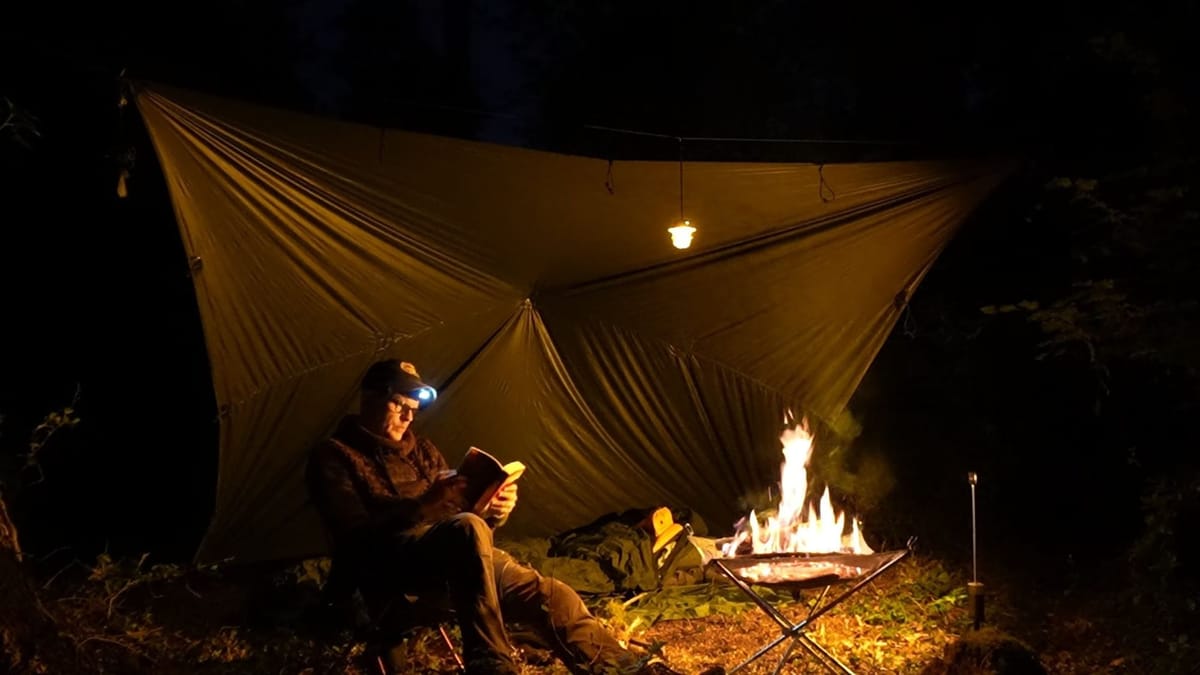
Is camping dying? Not dead, but it is in decline. On Google Trends, searches for "camping" have fallen year on year since 2006, and interest is now about half what it was in the early 2000s.
To dig into why, and what we can do about it, I spent a solo summer night under a tarp in a rainy English woodland. This post follows that night, and the argument, in the same order as the video.
Watch the tarp go up in the rain and the fire pit come to life. It sets the scene for everything below.
The camp: a tarp under the Douglas firs
For decades, camping meant freedom. You threw a tent in the car, pointed it at the mountains, the coast or the woods, and that was it.
Cheap, quick and real. That's the kind of camping I wanted for this night.
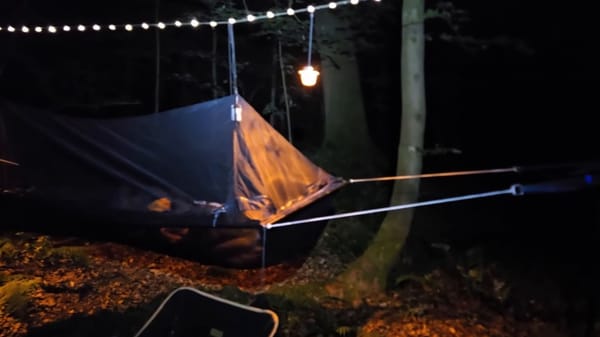
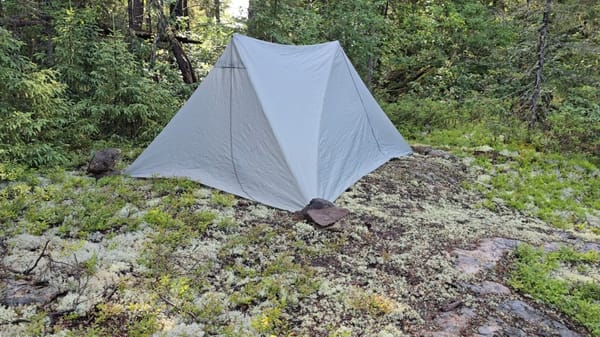
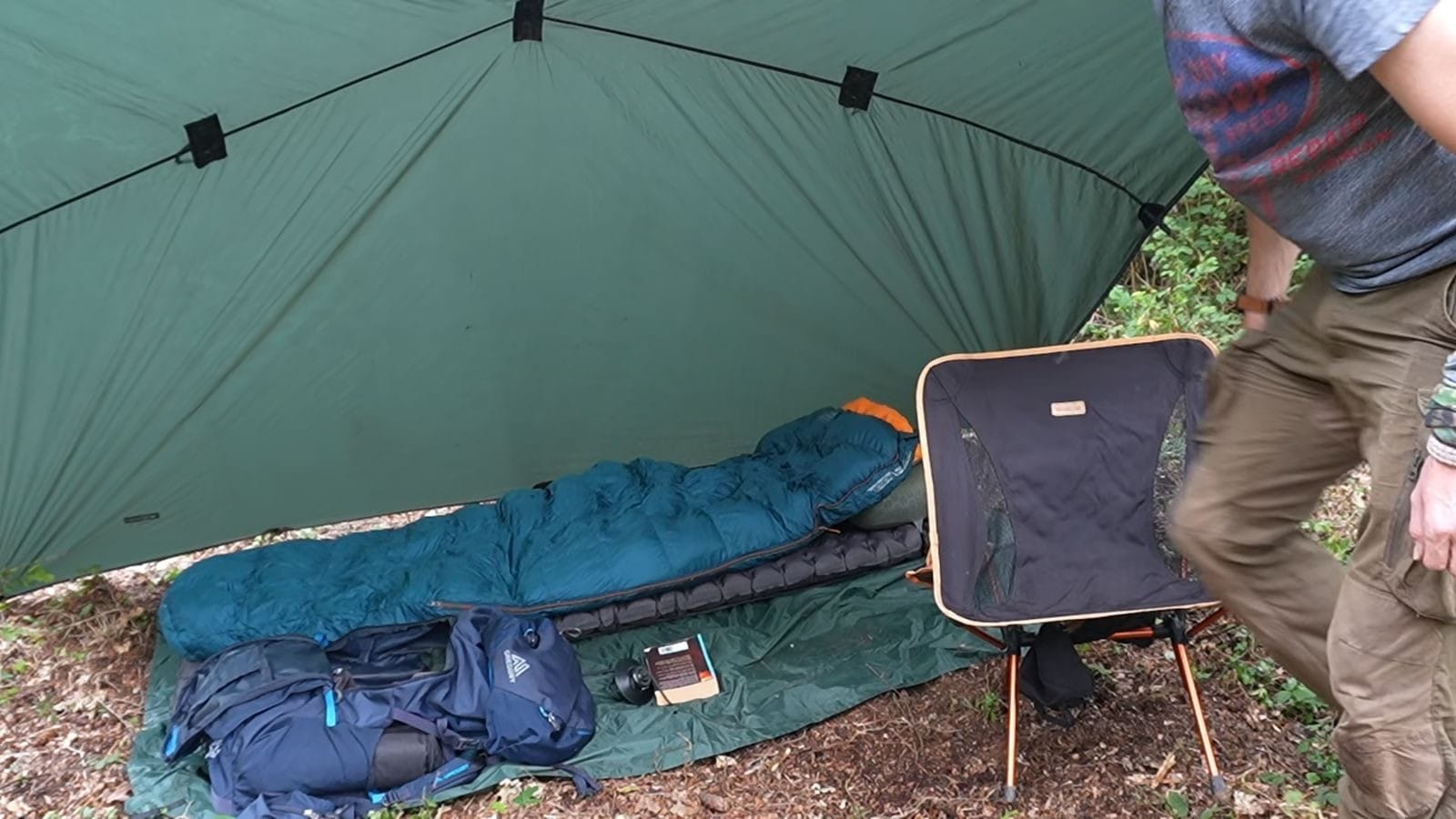
I pitched under Douglas firs in a private woodland, with heavy rain forecast. The setup was super simple: just a tarp, a pad and a sleeping bag, no tent.
Under the tarp there were acres of space, and I was confident I'd stay dry. You can watch the tarp setup at 1:29.
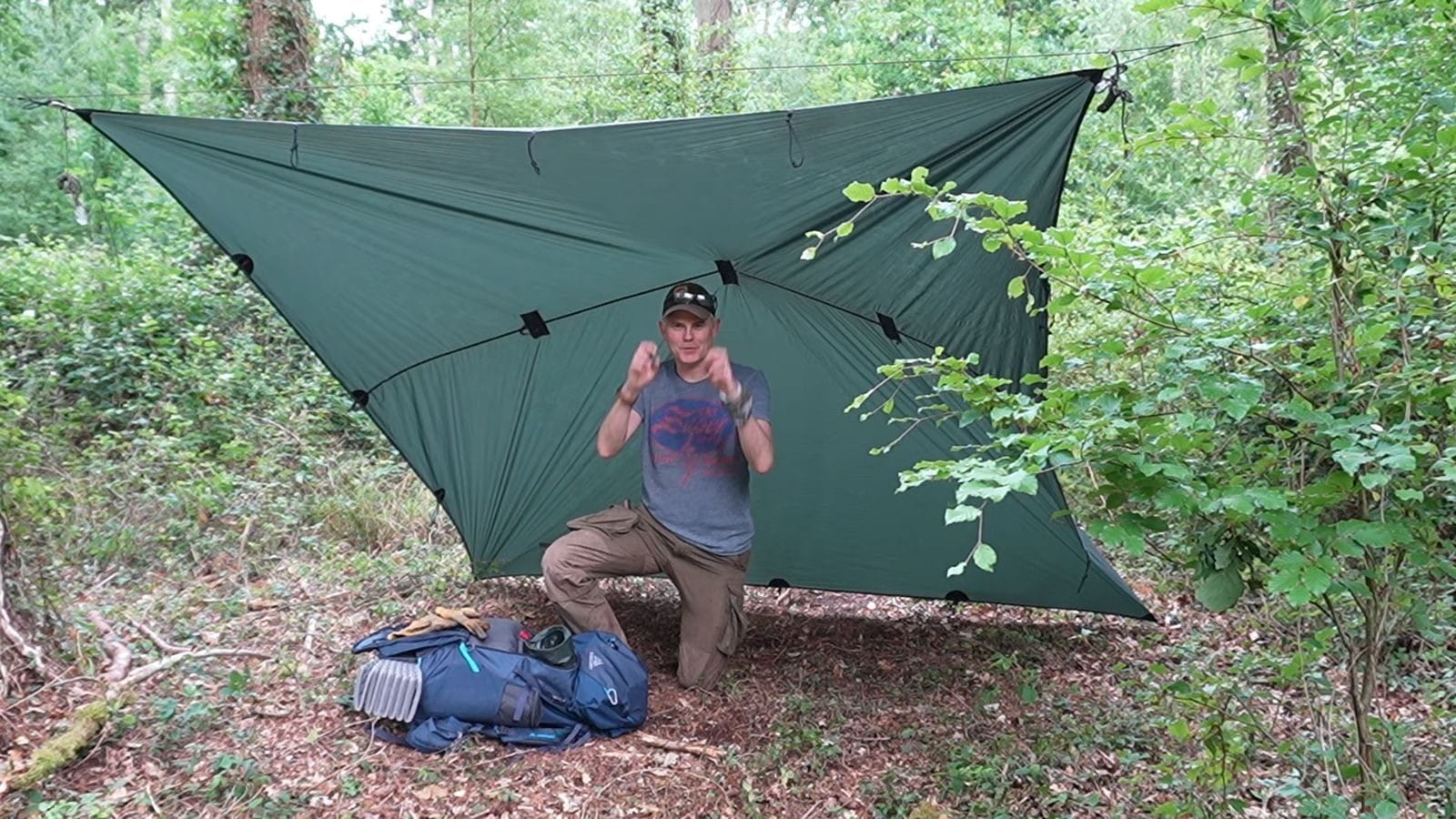
| The night at a glance | |
|---|---|
| Where | A private woodland in England, under Douglas firs |
| Shelter | DD Superlight 3x3 m tarp, no tent |
| Sleeping | OneTigris Obsidian pad and a sleeping bag |
| Fire | A £15 folding mesh fire pit |
| Dinner | Home-cooked chicken curry and a packet of rice |
| Weather | Light rain, on and off all night |
The phantom smoker
The last time I camped in this spot, under a bug net, something odd happened. I woke at 4am, pitch black, to the most intense smell of cigarette smoke, as if someone had blown it straight into my face.
There's a footpath not far away, but nobody could walk it silently in the dark with no light. Within seconds of waking, the smell had gone.
I'm pretty sure I made it up, but I said I'd report back. That night is in my bug net wild camp video.
Why is camping in decline?
There was a time when camping meant roughing it a bit. Cold toes in the morning, cereal balanced on your knee, wet tent poles and soaking socks.
My first camping trips were in the mountains of Northern England, with my dad's borrowed Vango tent. The gear was heavy and not that waterproof.
There were no showers, just a freezing toilet and a cold tap in the wall. It was imperfect, but it was magical, and I think that's where my love of camping was born. That campsite is still there.
What Google Trends shows
Back in the early 2000s, camping was at its height. Since then, with the exception of COVID, interest has dropped.
Interest in camping is now around 50% of what it was in the early 2000s. The chart I show in the video puts the fall from 2006 to 2025 at 47%.
Google Trends measures how many people search for a word, not how many people go camping. Even so, it's a clear signal that fewer people are looking for it.
New kit by the fire
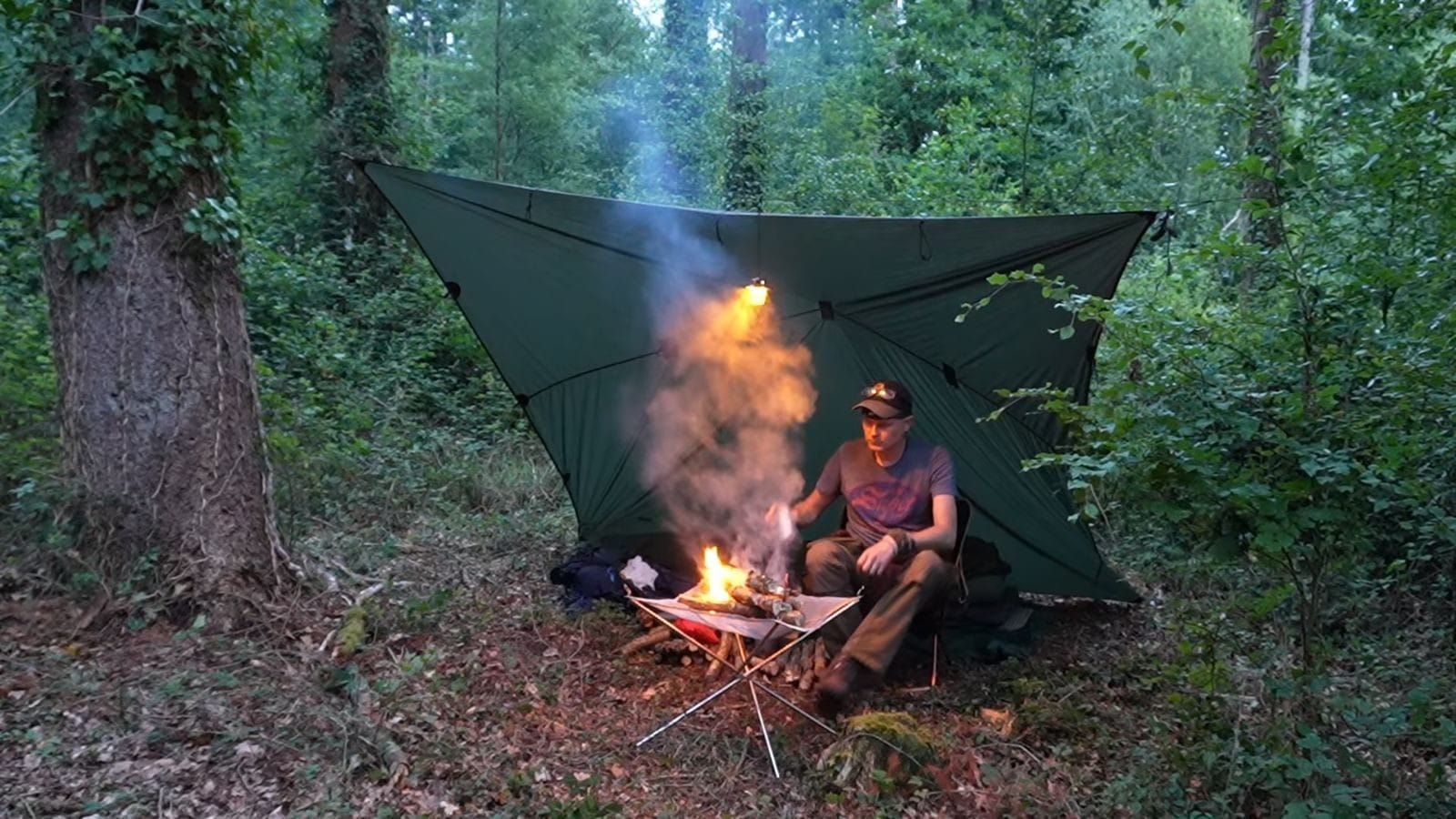
I also had a new toy to try: a very cheap £15 folding fire pit, which I'd seen reviewed by Luke at Outdoor Gear Review. With everything in the woods wet, I hoped the fine mesh would help it burn. I've written up how it got on in my £15 folding fire pit review.
Once the fire was going, it was beer o'clock: a BrewDog Nanny State. It's alcohol-free, since a friend was joining me the next night. It's my favourite of their alcohol-free beers, and no, I'm not sponsored by BrewDog.
What's changing about camping?
So what's driving the decline? These are the changes I talk through in the video.
- Campsites are swapping tent pitches for mobile homes and glamping pods, because they make much more money from them.
- Expectations have risen. People want plentiful warm showers, on-site activities and good washing-up facilities.
- Prices have climbed along with those expectations.
- Spontaneity has gone. A weekend away now needs reservations, apps and often a power hook-up.
- Newcomers want comfort: the outdoors, but with heating, Wi-Fi and an espresso machine.
- Gear companies have got us hooked on lots of expensive kit. I'm definitely hooked too.
In short, camping has become commercialised, and because prices have gone up, fewer people can enjoy it. See this part of the video at 9:03.
If you'd rather not get hooked on the wrong kit, I've listed 10 camping things I'd never buy again.
Dinner: chicken curry over the fire
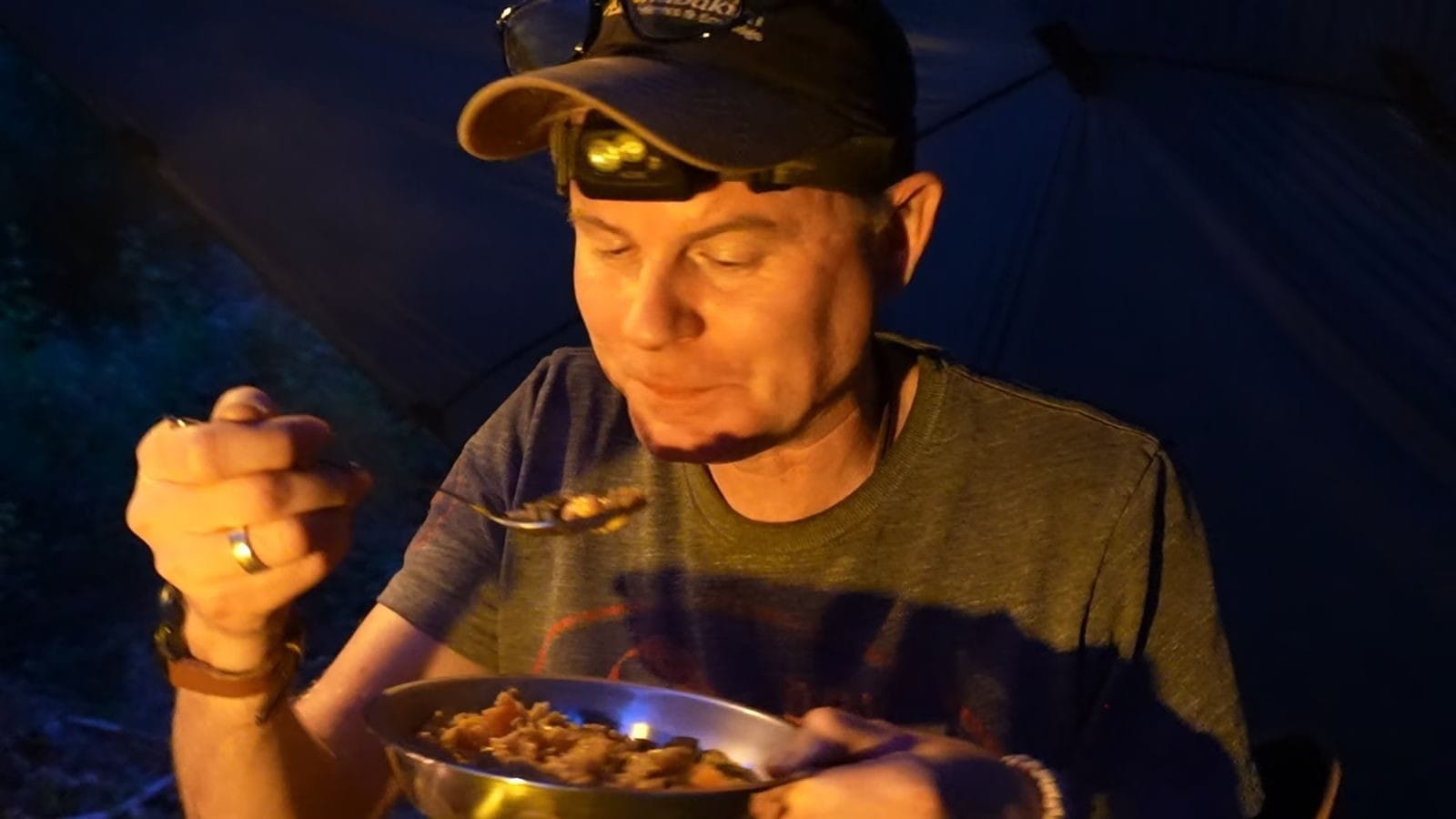
Dinner was chicken curry I'd cooked at home, with a packet of rice that serves two. I heated it in my cast iron pan on the fire pit.
Full disclosure: the pan wasn't in my backpack. I had to go back to the car for it.
It was far too much food for one sitting, but I managed it. You could tell I'd cooked it with my kids around: there were only two small chunks of chicken left in it.
It's not all bad: glamping and wild camping are growing
People still want their nature fix. They just want a more curated version of it. Glamping has exploded: yurts, domes, cabins and bell tents, some with rainfall showers and Bluetooth speakers.
Only the weekend before, I'd been glamping with friends and had a great time, although I still found a quiet spot in the woods to hang my hammock.
Wild camping: growing, but harder
Wild camping, which is what I was doing, is growing too. But it's getting harder, with new laws, new restrictions and fewer places that feel truly wild, especially in places like the UK.
I filmed this in a private woodland. Camping somewhere like this in England is hard, and so is getting all your gear in place.
On Google Trends, both ends of the spectrum, from wild camping to glamping, are rising. Hammocking grew, but is now dipping a little. The fall in interest in camping overall is far larger than those rises, so camping as a whole is still shrinking.
The night under the tarp
By midnight there was only a gentle patter of rain on the tarp. I'd hoped for more. I watched the fire burn down for a few hours before I drifted off.
It was such a peaceful night. The light rain came and went all night, and early in the morning the birdsong was incredible. The only casualty was a big hole in my sleeping bag, which I still need to work out how to repair.
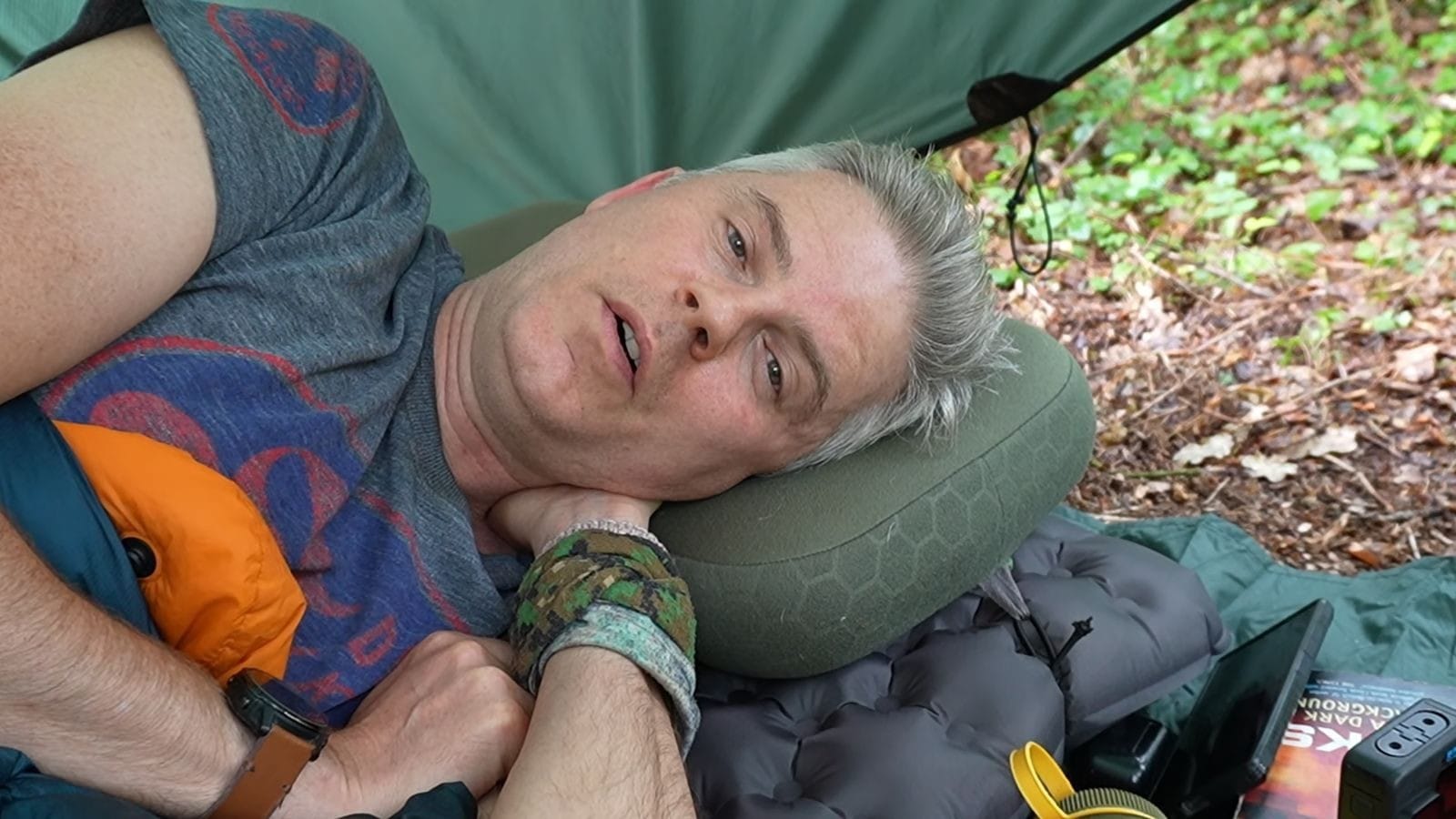
As for the phantom smoker: nothing. No ghostly vapours, no silent walkers, just a good, relaxing night's sleep. The tarp stayed up for a friend to sleep under the following night.
So, is camping dying?
Not at all, and "dying" is probably an exaggeration. As I say in the video, camping still has about the same level of worldwide interest as tennis, and over four times that of Formula 1.
But it is in decline, probably because it's turning into something both more expensive and more sanitised. We're at a crossroads between wild camping, which is free, and expensive glamping. You can jump to my answer at 16:14.
What you can do to keep camping alive
If you care about real, minimalist camping, under the sky, a canopy or a tarp rather than fairy lights, now is the time to fight for it.
- Support campsites that still welcome tents.
- Pack it in, pack it out. The Countryside Code asks you to take your litter home and be careful with fires.
- Teach kids how to put up a tarp.
- Choose trees over screens.
Glamping might sell better on Instagram, but real camping is something deeper. There's a stronger sense of peace and perspective, and the joy of waking up to the patter of rain on your tarp. If you glamp, I'm still really happy that you're getting outside.
If you fancy trying a simple tarp night yourself, my bug net and tarp shelter for under 50 dollars is a cheap way in.
Would I go back?
I already have. This was my second night in this spot, after the bug net camp, and it was such a peaceful night's sleep. If you want the bigger picture of why we put ourselves through it, watch is camping really worth all the trouble.
How does it make you feel that our hobby is in decline? Tell me in the YouTube comments.
Watch the full night under the tarp, then subscribe to Camp With Matt. Let's keep camping, and stay wild.